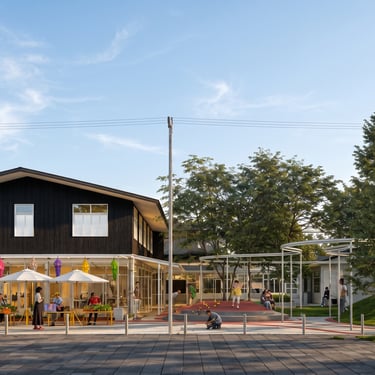
Hor Jai Baan
Hor Jai Baan reimagines the grounds of the Chiang Rai Women’s Cultural Promotion Association as an everyday public landscape where community life, culture, and informal activities coexist. Located within an institution that has been part of Chiang Rai for more than eighty years, the project transforms the site into a Privately Owned Public Space (POPS)—a place that extends beyond the organisation itself and welcomes the everyday life of the surrounding neighbourhood.
The project begins with a simple question: What kind of public space stays with us long after we leave?
For many people, the answer can be found in the familiar scenes of grassy riverbanks often depicted in Japanese films and manga—ordinary landscapes where children gather after school, friends spend time together, and everyday life unfolds without predetermined programmes. These places are remembered not because of what they contain, but because of the freedom they offer and the memories they quietly accumulate over time.
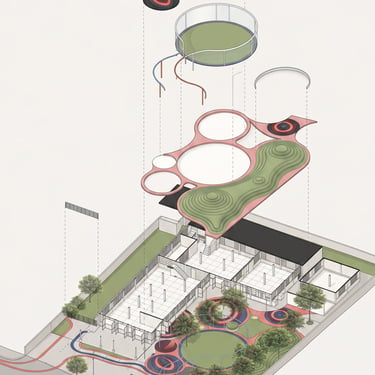
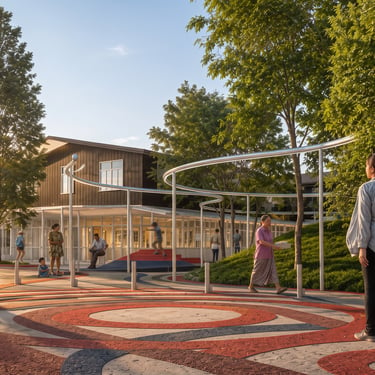
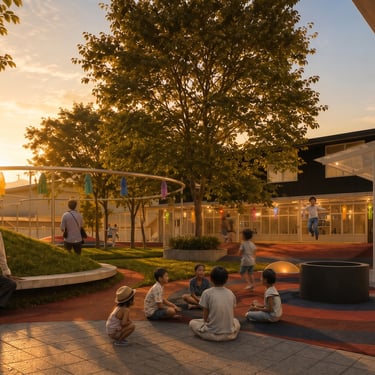
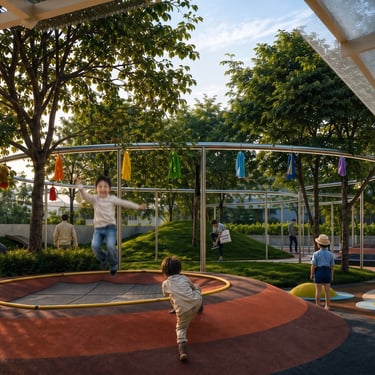
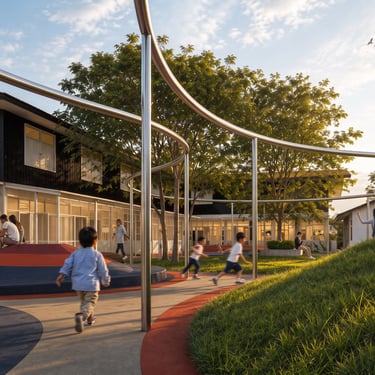
Rather than recreating this image literally, the project translates its qualities into a contemporary landscape. A series of gently contoured grassy mounds becomes the primary spatial framework, supporting play, rest, conversation, learning, and community events without assigning fixed functions. Instead of directing movement or prescribing activities, the landscape invites people to discover their own ways of occupying the space.
The intervention also recognises the cultural significance of the existing building. Through an Adaptive Reuse approach, the historic structure is carefully preserved while the landscape becomes the principal medium of transformation. The organic landforms soften the building’s presence, establish new relationships between architecture and open space, and allow the existing institution to become part of a more open civic environment.
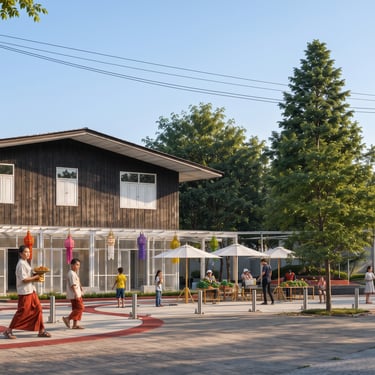
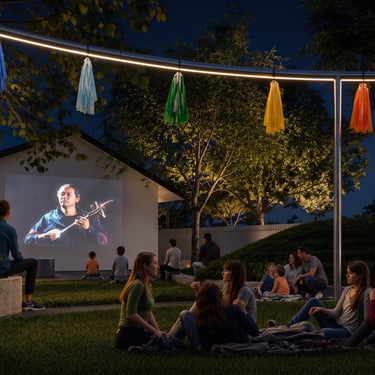
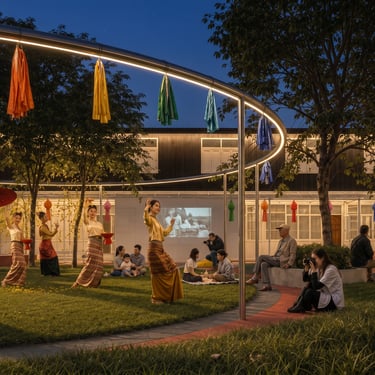
Throughout the day, the landscape continuously adapts to different forms of occupation. Children’s play gradually gives way to community gatherings, outdoor markets, performances, and evening film screenings. Rather than separating programmes into dedicated zones, the project allows a single landscape to support changing rhythms of public life over time.
Hor Jai Baan does not seek to create a new public park. Instead, it creates the conditions for new memories to emerge from an existing place—where architecture, landscape, and everyday life gradually become part of the city’s collective memory.
Collaboration with: Plang Guy Studio
Location
Chiangrai, Thailand
Status
Proposal
Organizer
Ceative Economy Agency(CEA)
Type
#Research #Urban Renewal
Gross Floor Area(GFA)
2,000 square metres